
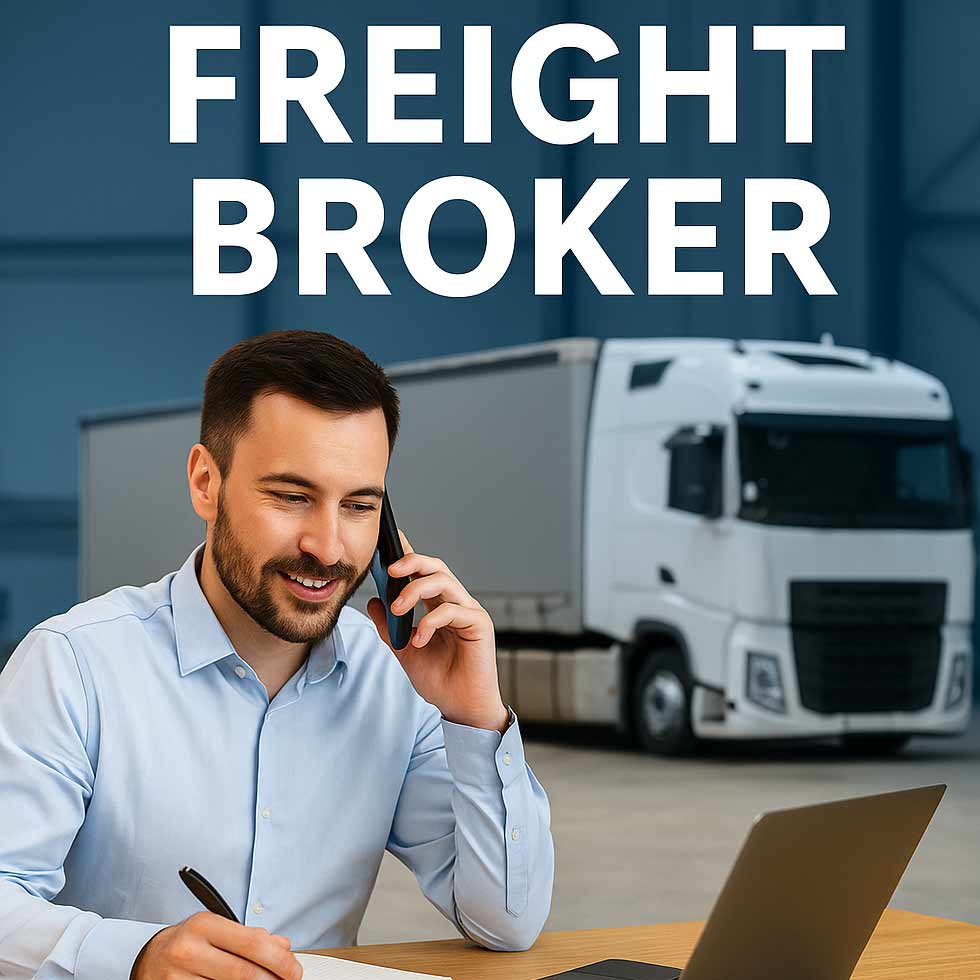
If you’re looking to start a lucrative and flexible career in the logistics industry, becoming a freight broker might be the perfect opportunity. Freight brokers serve as the middlemen between shippers who need to move goods and carriers who have the trucks to transport them. The demand for freight brokers continues to grow in the U.S., making it a great time to enter the industry.
In this post, we’ll break down everything you need to know about how to become a freight broker – including licensing, training, and startup tips.
Want a faster, mistake-free path?
If you don’t want to piece this together from forums, YouTube, and outdated guides, I created a step-by-step freight broker training that walks you through:
✔ Getting licensed correctly
✔ Avoiding common FMCSA & bond mistakes
✔ Finding your first shippers
✔ Quoting lanes confidently
✔ Booking loads without getting burned
👉 See the Step-by-Step Freight Broker Training Program
(Built to help beginners avoid costly mistakes and start booking freight faster)
This training is built from real freight brokerage operations and current FMCSA requirements — not recycled theory or outdated YouTube advice.
What Is a Freight Broker?
A freight broker is a licensed professional or business that arranges the transportation of goods for shippers by connecting them with authorized carriers. Freight brokers do not own trucks or handle freight directly — they coordinate logistics and earn money through commissions.
Why Become a Freight Broker?
- High Income Potential – Many brokers earn six figures annually.
- Low Startup Costs – No need to buy or maintain trucks.
- Work from Anywhere – Run your business from home or office.
- Growing Industry – U.S. freight volume is expected to increase in the coming years.
- Flexible Schedule – Great for entrepreneurs and self-starters.
Is Freight Brokering Right for You?
Freight brokering is a great fit if you:
- Want to run a real business (not a side hustle fantasy)
- Are comfortable negotiating and following processes
- Can handle responsibility and deadlines
- Want control over your income and schedule
It may not be right if you:
- Expect passive income
- Avoid sales conversations
- Don’t want to learn regulations or systems
If you’re serious about doing this the right way, structured training will save you months of trial and error.
Step-by-Step Guide: How to Become a Freight Broker
1. Gain Industry Knowledge
Before jumping in, it’s important to understand the transportation and logistics industry. Learn basic freight terms, how trucking works, and the different types of cargo.
Tip: Consider working for a freight brokerage or taking an online freight broker course to gain firsthand experience.
2. Take Freight Broker Training
Freight broker training helps you understand how to:
- Find shippers and carriers
- Negotiate rates
- Use load boards
- Handle paperwork and regulations
- Operate freight management software
Link to Register: Freight Broker Training
A Quick Reality Check (Most Guides Skip This)
The licensing steps are straightforward — the hard part is execution:
- Knowing what to say to shippers
- Quoting lanes profitably
- Avoiding bad carriers
- Handling claims, delays, and rate disputes
This is where most new brokers fail — not because they can’t get licensed, but because they don’t know how the business actually runs day-to-day.
That’s exactly what a structured freight broker course is designed to solve — showing you how the business actually runs day to day.
3. Register Your Business
Set up your brokerage as a legal business entity. Common options:
- Sole Proprietorship
- LLC (recommended for liability protection)
- Corporation
Steps:
- Choose a business name
- Register with your state
- Apply for an EIN from the IRS (Employer Identification Number)
4. Apply for a USDOT and MC Number
To legally operate as a freight broker, you must register with the Federal Motor Carrier Safety Administration (FMCSA).
- USDOT Number: Required for tracking safety and compliance
- MC Number: Identifies you as a freight broker
Register online at: https://www.fmcsa.dot.gov
5. Obtain a Freight Broker Bond (BMC-84)
A surety bond of $75,000 is required by FMCSA. This bond protects shippers and carriers from broker fraud or non-payment.
- You can purchase this from a bonding company
- Premiums typically cost $900–$2,000 annually depending on credit
6. Get a Process Agent (BOC-3 Filing)
A process agent is someone who can receive legal documents on your behalf in every state you operate.
- Most brokers use nationwide services to file their BOC-3 form electronically
- Required before your MC number becomes active
7. Buy Freight Broker Tools & Software
To manage loads, communicate with carriers, and keep track of paperwork, you’ll need:
- Load boards (e.g., DAT, Truckstop)
- TMS software (Transportation Management System)
- Fax/email services
- Accounting & invoicing tools
8. Start Booking Freight
Once your MC number is active (usually within 21 days), you’re ready to start booking loads!
Tips to find loads:
- Reach out to manufacturers, distributors, and importers
- Use load boards to post and search for loads
- Build relationships with reliable carriers
Final Thoughts
Becoming a freight broker takes planning, licensing, and the right tools — but it’s a highly rewarding career path. Whether you want to work independently or grow into a full brokerage firm, the opportunities in logistics are wide open.
Want to Skip the Guesswork?
You can piece this together on your own — or you can follow a proven, step-by-step system built for beginners.
The FreightLearn Freight Broker Training covers:
- Licensing & compliance (explained simply)
- Real-world quoting examples
- Shipper outreach scripts
- Carrier vetting
- Tools, load boards, and workflows
Ken Smith
i will be starting a freight brokerage soon was looking for a little guidence